I’ve been poking through many archival documents lately, my favorites being quirky little handbooks from the NPS and Forest Service from the early and mid 20th century. Despite being government publications, they’re seasoned with bits of human character: hand-drawn schematics, cartoons, opinionated asides, and slangy turns of phrase. In many of them, the voice of the author shines through, even when that author is anonymized behind an agency byline or buried several pages into the text.
Perhaps it’s just nostalgia for bygone aesthetics, but it feels like—at least anecdotally—that those quirky bits got squeezed out over the decades. Today’s government reports and manuals are mostly technical jargon accompanied by digital illustrations with perfectly straight lines and uniform typefaces. They’re accurate, informative, and terribly boring.
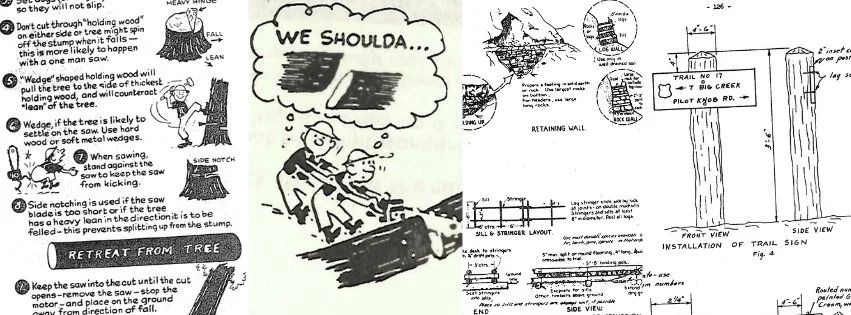
Illustrations from Trail Transportation Procedure Guide, USFS 1959.
While this sounds like a niche complaint, the documents of today point to a broader pattern of bureaucratization. Bureaucracy isn’t inherently bad, and it can lead to important protections through regulation and enforcement. But it has its costs. Excessive bureaucracy means convoluted hiring, slow-moving projects, and complicated permitting regimes, problems that are generally acknowledged from both sides of the aisle. A complex system trends towards standardization in order to keep things moving along, and the aesthetics of that system become drab and dispassionate.
The result is the pervasive sentiment that “the government” is some soulless, self-interested leviathan rather than what it actually is: a bunch of human beings working together, many of whom you know and some of whom are your neighbors. This impersonal image of government is what makes it so easy to attack. It’s much easier to stomach the notion of “defunding an agency” over “firing public servants.”
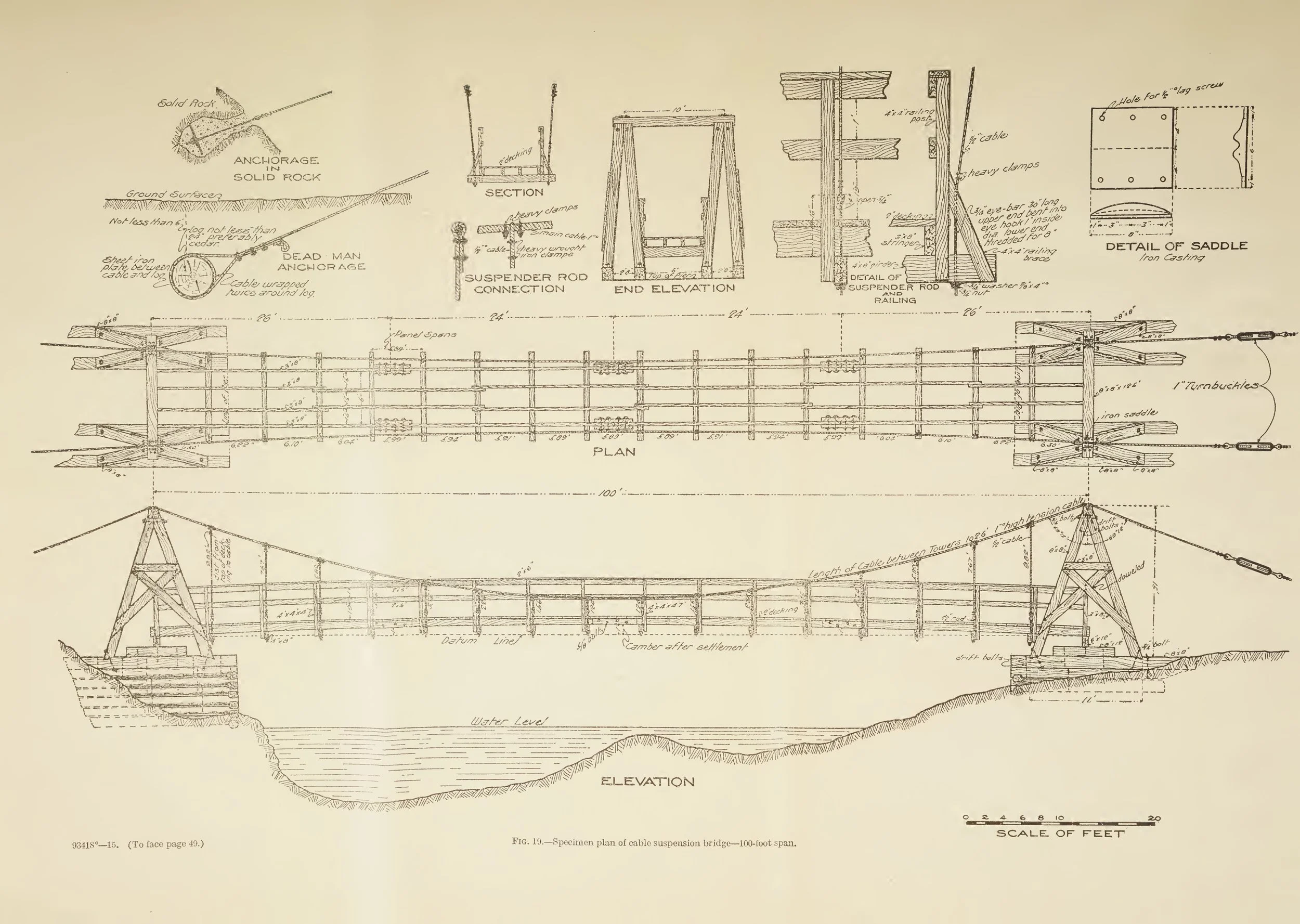
Hand-drawn schematic in Trail Construction on the National Forests, USFS 1915.
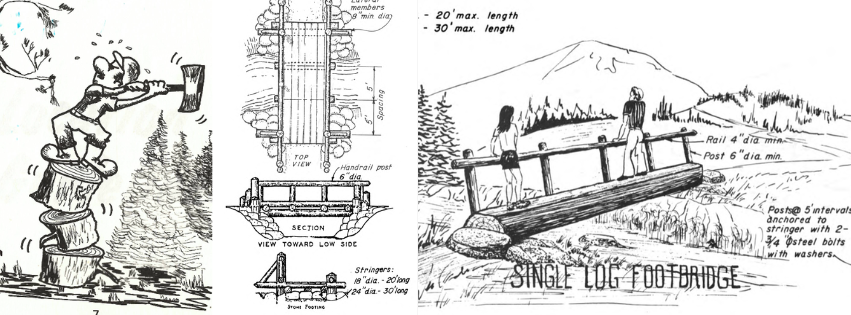
Illustrations from the USFS Guide for Mountain Trail Development, 1976.
In a sea of very serious calls-to-action for very serious problems, I offer a more modest one: inject more whimsy. Add a little flair. Allow things to be imperfect.
While this is particularly important for those working in public service, I suspect it will become salient across all sectors, public and private. When every email, social media post, and report can be written and then summarized by AI, people are going to stop reading them. We witnessed this trend in the early days of email, when people were excited to get any email from anyone. And then spam, marketing, and e-newsletters came along, and people started ignoring most of their emails altogether.
But people pay attention when they detect a human touch, a sense that a human being took the time to do something in an authentic, personal way. A handwritten letter, a phone call, a homemade item. I remain optimistic that a silver lining of the AI revolution will be a heightened appreciation of human-to-human relationships and of handmade things.

A ferrocement bridge shaped to look like wood, built by Zachi Anderson, master of whimsy. Photo courtesy of Zachi Anderson. Real the full interview with Zachi here.
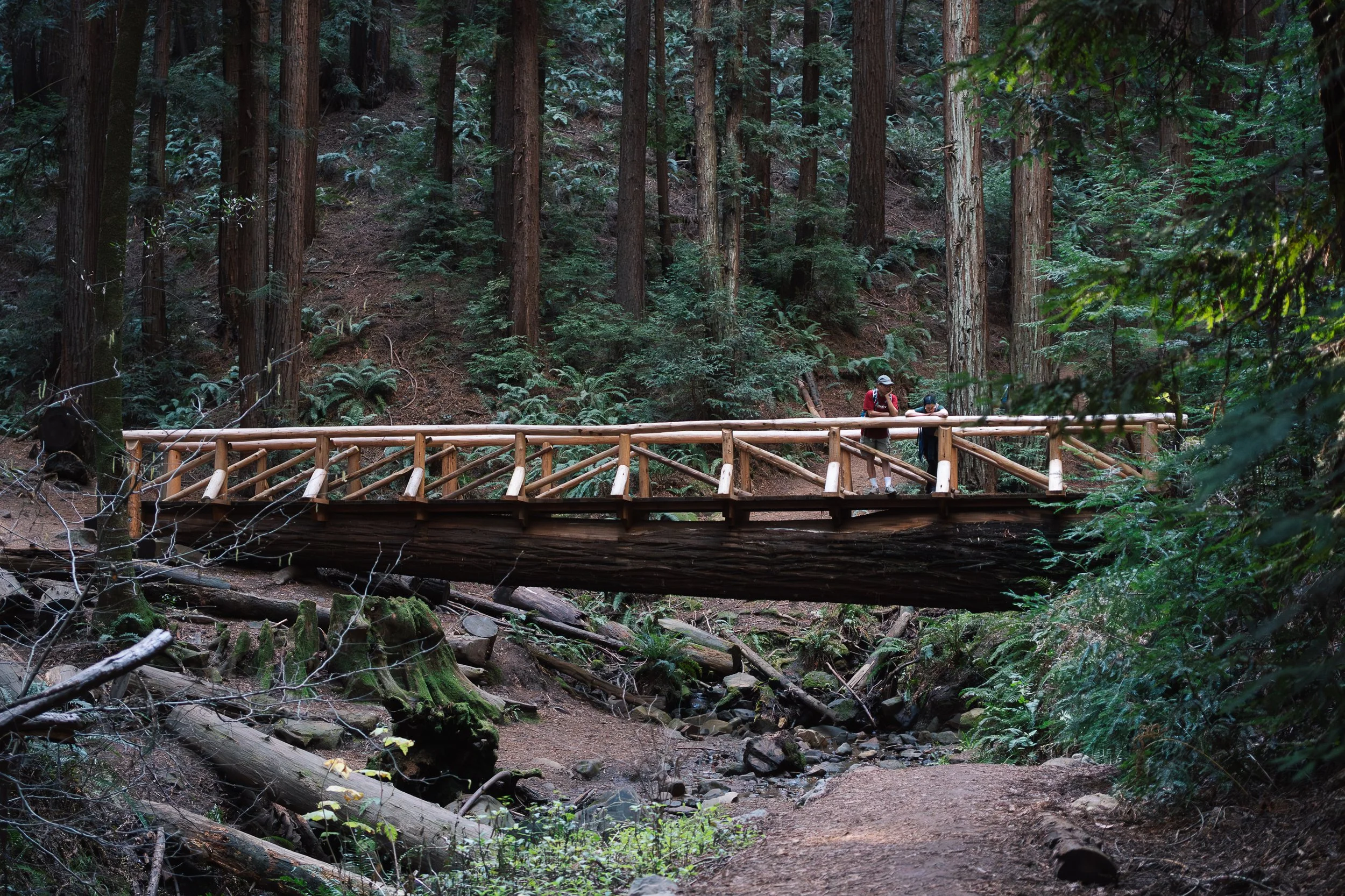
The Tres Sendas Bridge, located in Reinhardt Redwood Regional Park. Top-notch whimsy from the East Bay Regional Park District Trail Crew.
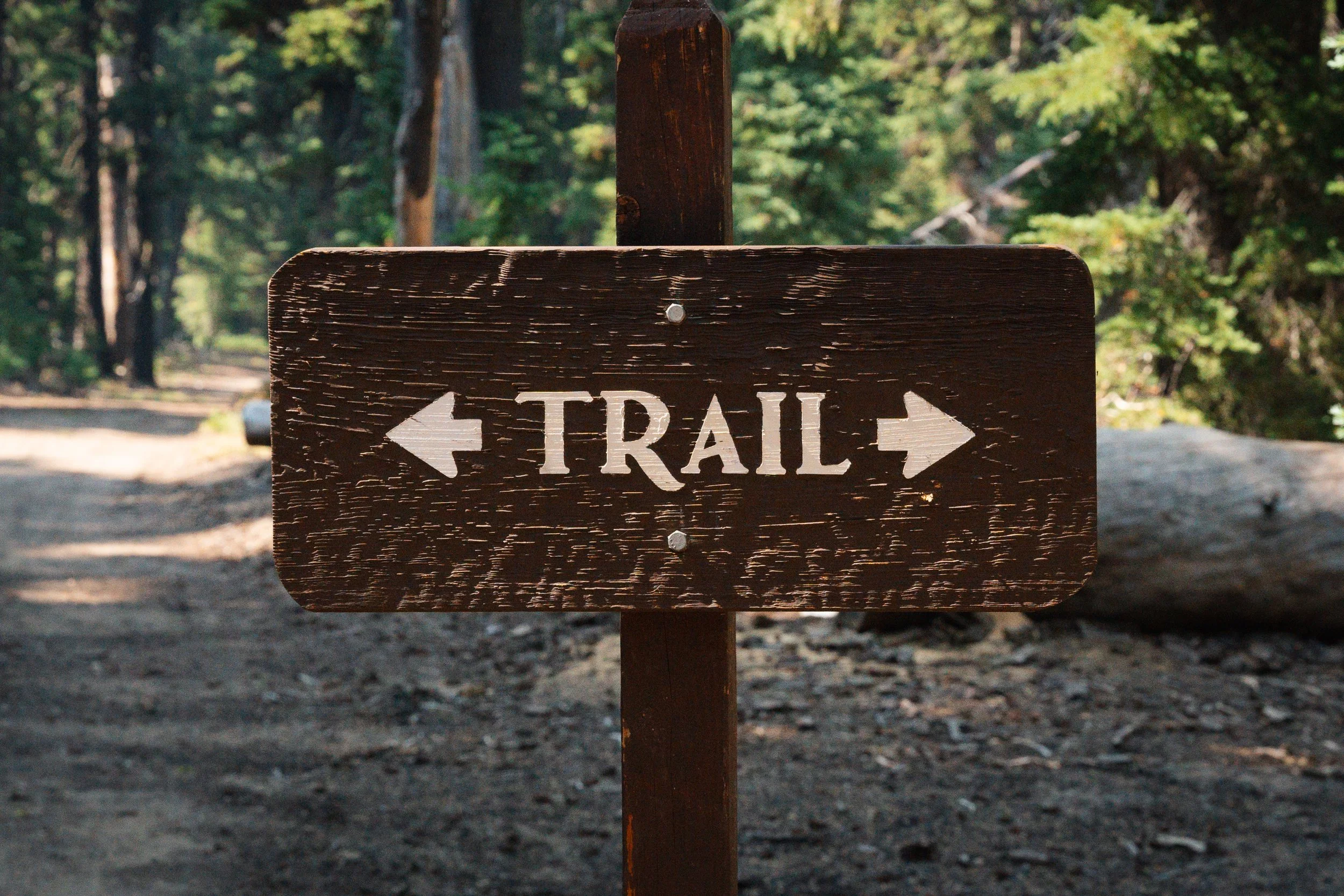
Hand-carved and painted signs in a whimsical script in Crater Lake National Park.
Consider the crew from the recent Artemis II mission around the moon. They captivated the world with eloquent and poetic speeches. They weren’t shy about showing affection to one another, and reflecting in tearful public moments. A cute plush toy named “Rise” that was designed by an 8-year-old served as both zero-gravity indicator and mission mascot. That’s whimsy! Compare that to the original Apollo missions, where astronauts almost always maintained a rigid and militaristic public demeanor.
The Artemis II crew proves that “professional” and “whimsical” need not be mutually exclusive. Of all places in government, public land management seems like one of the easiest to make things more playful, relatable, and human. Most people already love park rangers and other public land stewards. Adding some additional flair and silliness will only endear them further to the public. In trails, that means adding artistic touches to bridges, walls, and staircases to emphasize the human-made rusticity of the thing. We trailbuilders should be unafraid to tinker.
After all, in a paradigm of mass layoffs, organizational restructuring, and understaffing, I think we can all benefit from encouragement to be a little more imperfect, a little more human, and a little more ourselves.
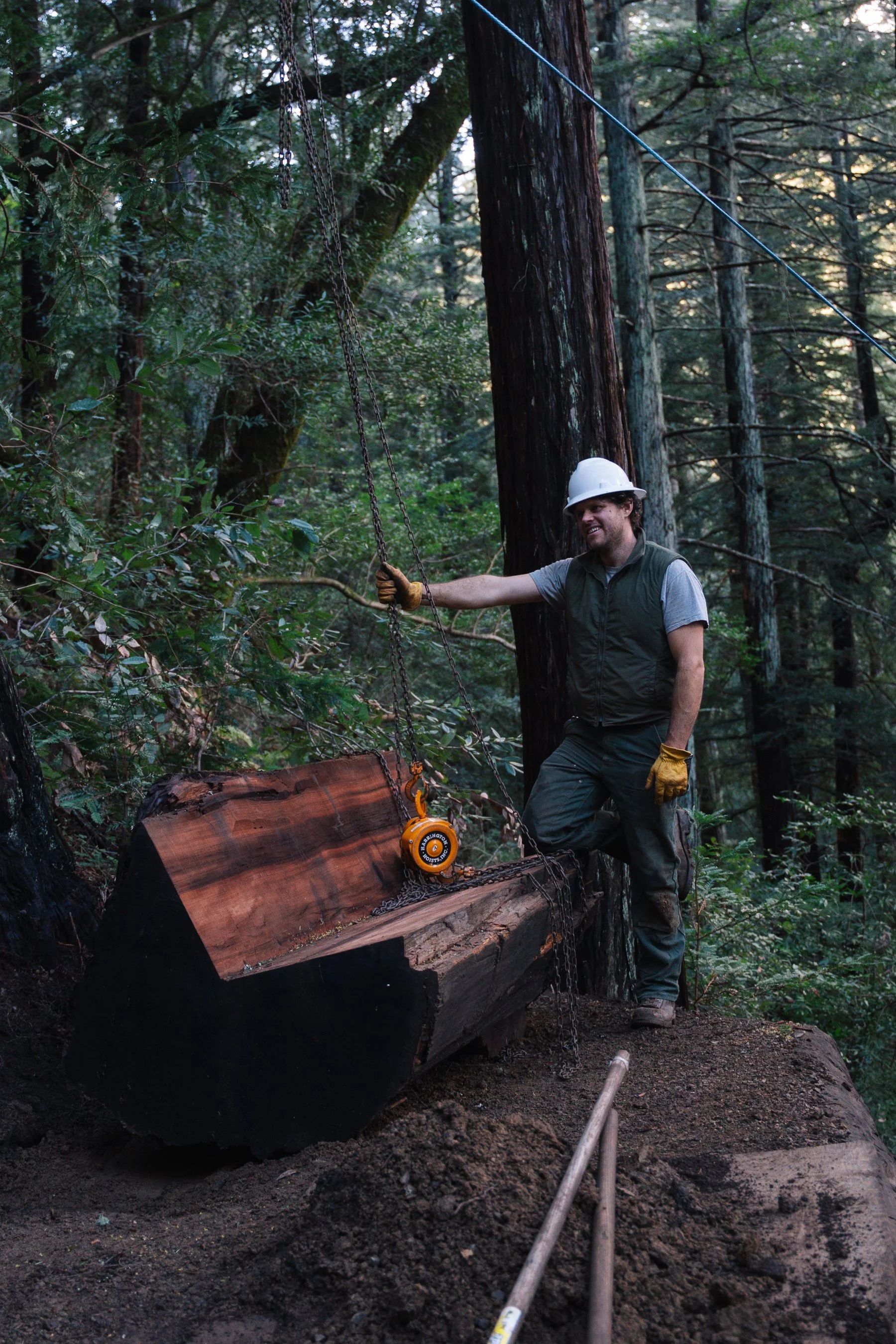
Installing a rustic—and whimsical—bench on the Ben Johnson Trail in Muir Woods National Monument.