Photographer Spotlight: Michael Fitch
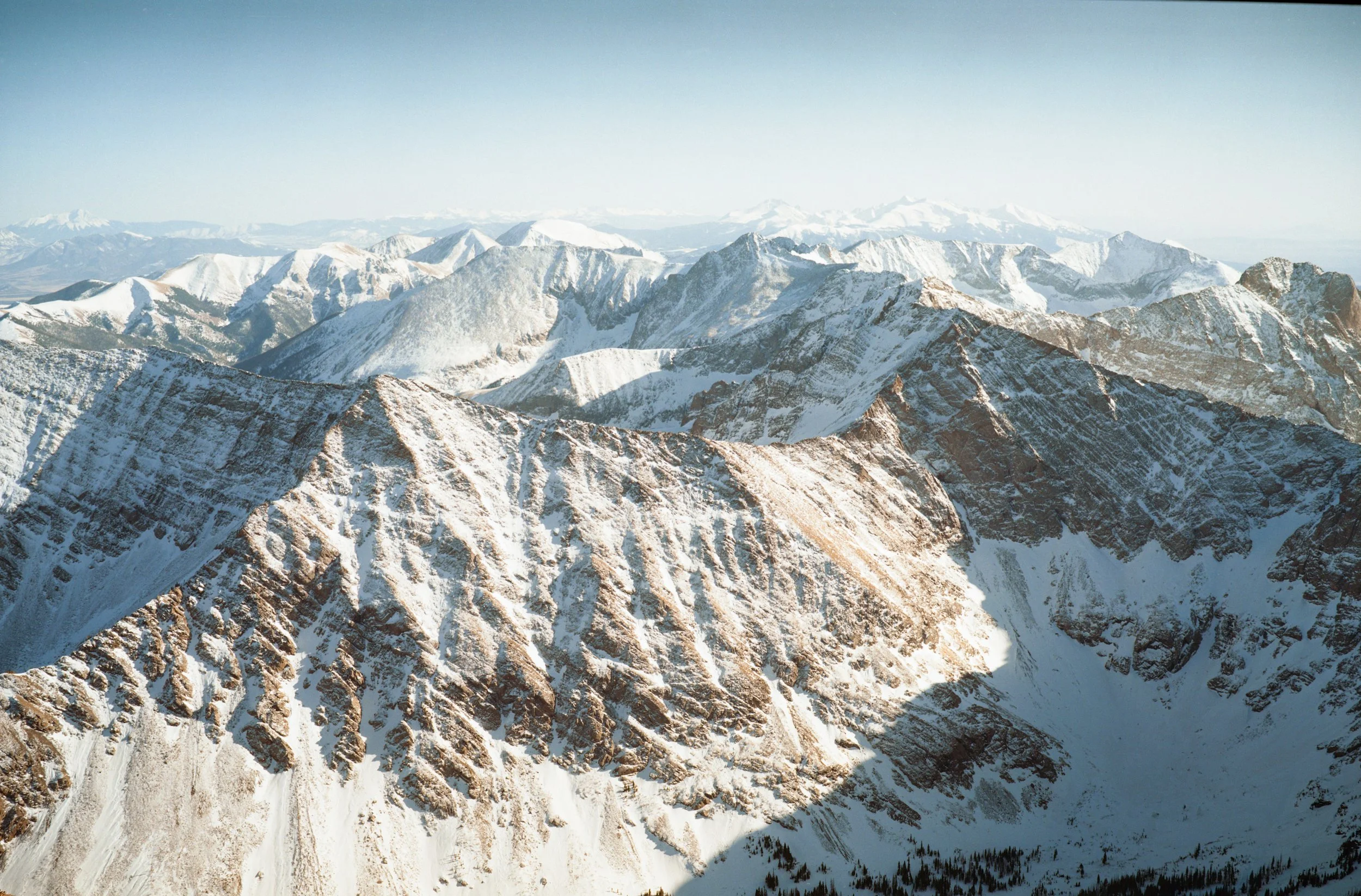
Photo courtesy of Michael Fitch
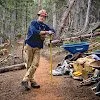
I met Michael Fitch as he kneeled over a hole, crushing in a rock. As we got to chatting, we found that we had a few things in common. First, we had both worked for Rocky Mountain Field Institute (RMFI) on the Devil’s Playground Trail on Pikes Peak; he when we met in 2024, and I in 2021. Second, we share a name: Fitch is my middle name. And third, we both love photography.
His images have a quiet honesty about them, transforming daunting western peaks into tranquil panoramas. Even his working photos have a cool precision, evoking the focused, intentional movements of trailbuilding.
I followed up with Michael a year or so after we met to ask him about what inspires him to pull out his camera and click the shutter.
All photos by Michael Fitch.
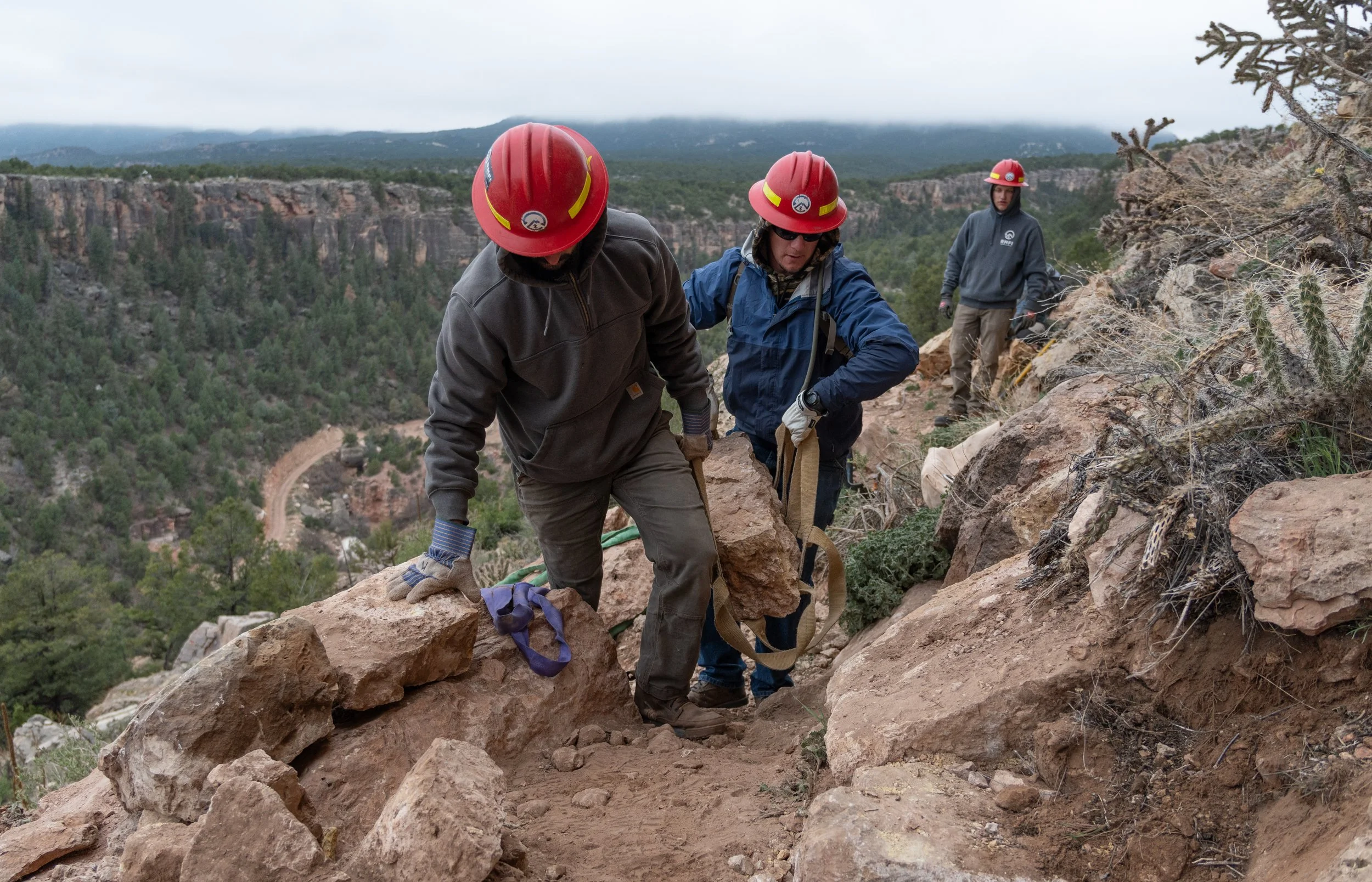
The start of the 2025 season on Shelf Road. This is one of the more technical projects I've been a part of, with treacherous slopes and an endless variety of cactus needles to dig out of our gloves. — Michael Fitch
Joe Gibson: How long have you been practicing photography?
Michael Fitch: I’ve always been fascinated by photography, but I started to explore it more about five years ago.
JG: How did you get into doing trailwork?
MF: I saw a listing for a RMFI trail crew position early in 2024, and desperately hoped I’d get a spot on the crew, even though I had no experience. Previously, it didn’t even occur to me that this was something I could do for a living. I’ve always been into backpacking, hiking, and just the outdoors in general, but I’ve been trying to delve into my interests a little deeper over the past few years. Being part of a trail crew forces you to truly take in all aspects of a place and have a deeper appreciation. I was nervous about the uncertainty going into my first seasonal job, but I’m so happy I took the risk.
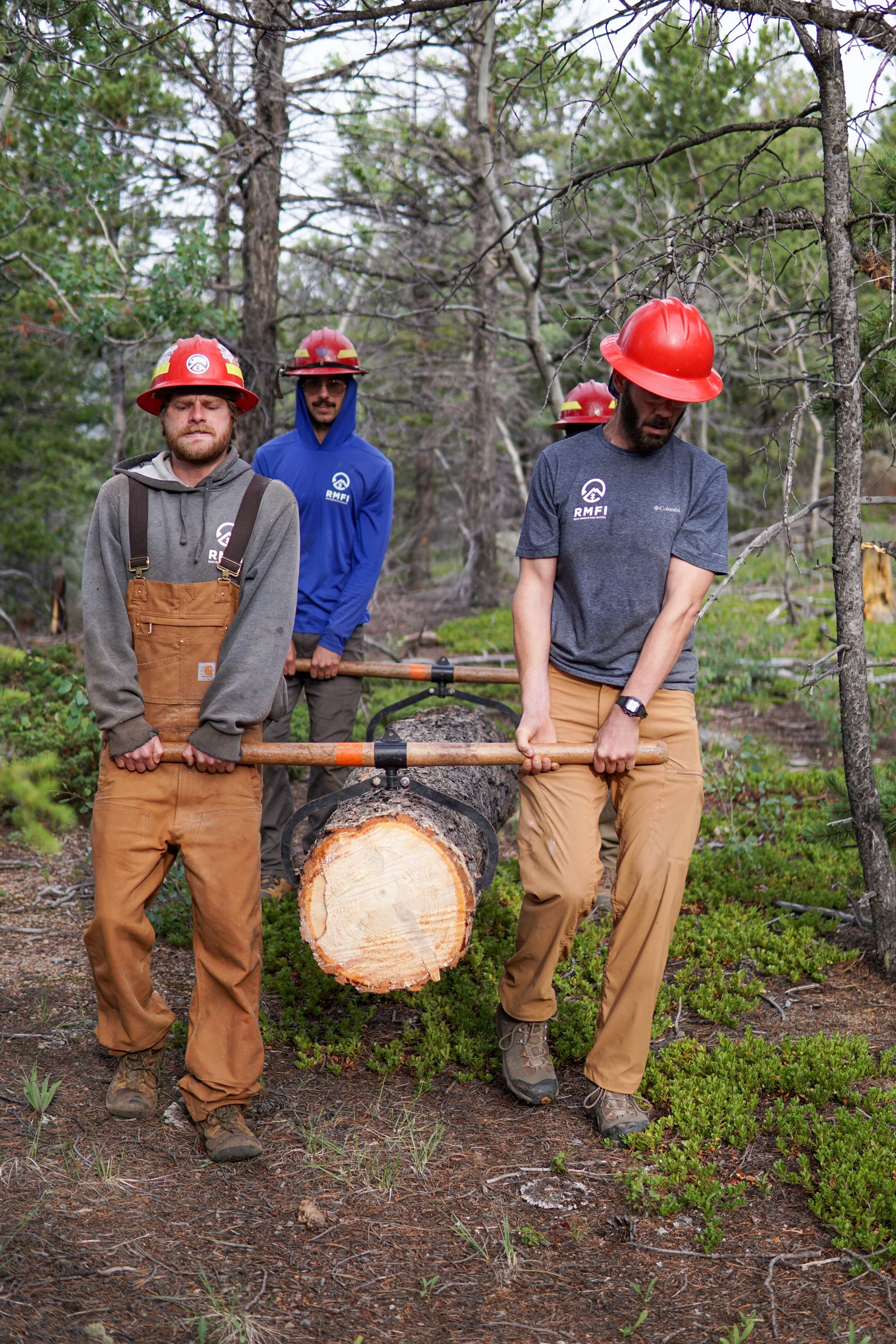
We felled, carried, and installed more than 200 of these over the past two seasons on Barr Trail. — Michael Fitch
JG: What is it that draws you to landscape photography?
MF: Landscape photography helps me sentimentalize my time spent in nature. It’s so immersive to sit and patiently take in a scene while waiting for the perfect lighting. There are so many incredible experiences you will miss if you’re always quickly passing through a place. I love the challenge of translating a scene into a captivating image. It’s hard to explain the feeling you get when you can press the shutter and know it’s going to turn out exactly how you envisioned.
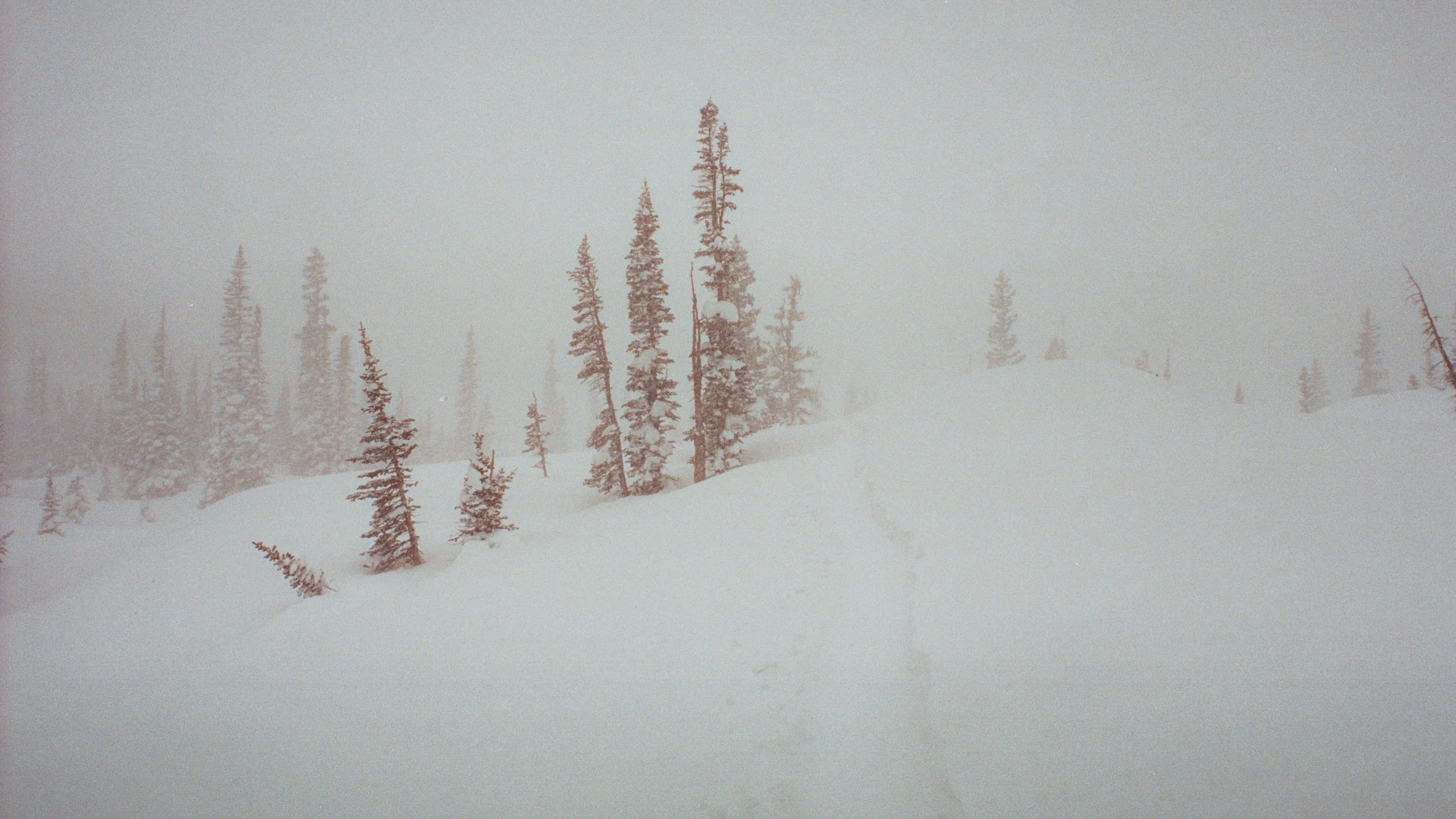
I love the atmosphere and depth that a storm can add to a photo. This is right before you reach Lake Haiyaha in RMNP. Thousands of people have taken the cliché lake shot here, but I think it's really cool being able to experience something unique. — Michael Fitch
JG: What situations inspire you to pull out your camera and photograph your colleagues on the trail?
MF: It’s inspiring to work with people when you can tell they genuinely care about their craft. You can tell when they’re just so in the zone and focused on the tiniest details of a rock staircase, bridge, or whatever other structure. I want to share the love of trail work with people who would never otherwise be exposed to it.
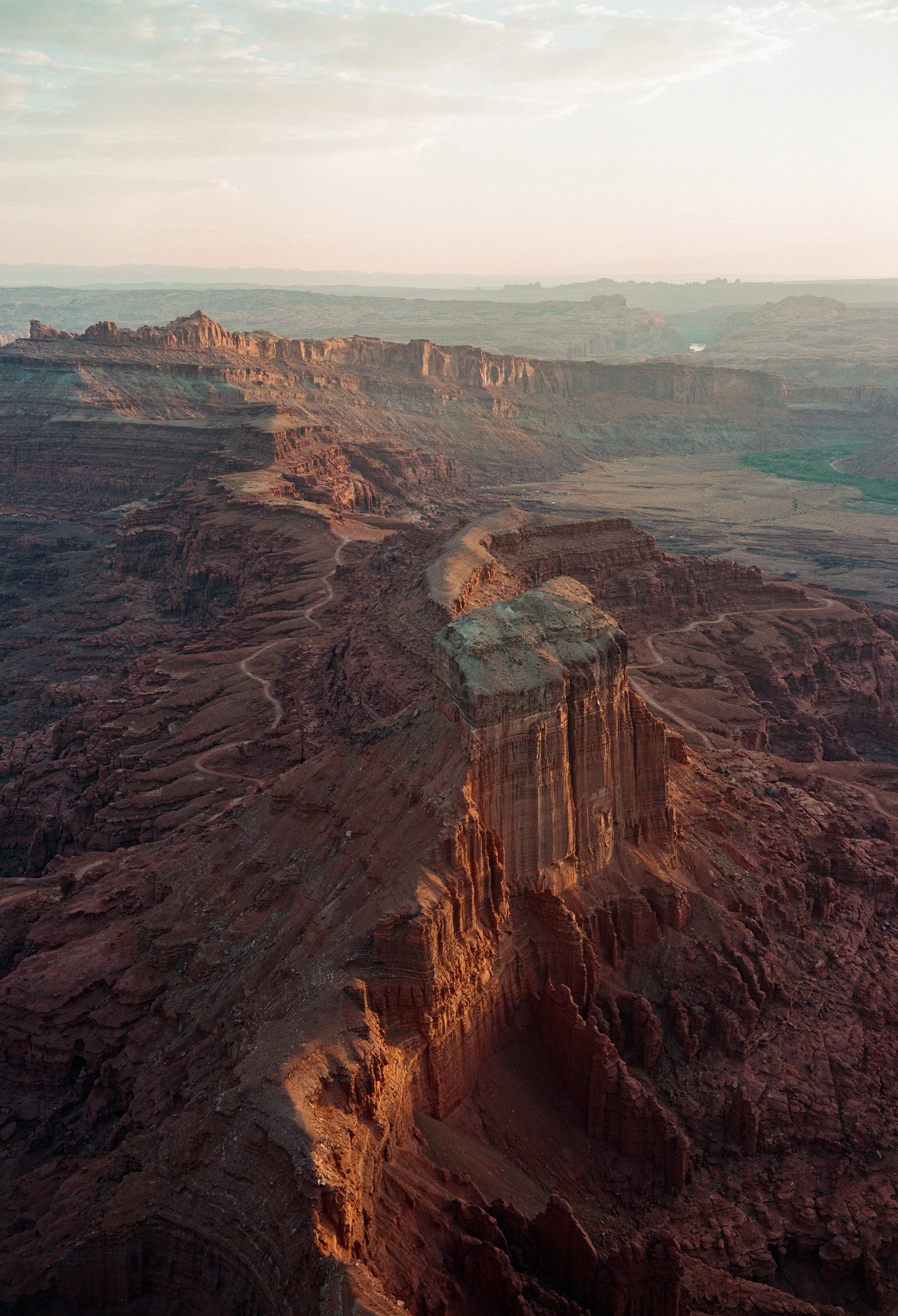
Photo by Michael Fitch
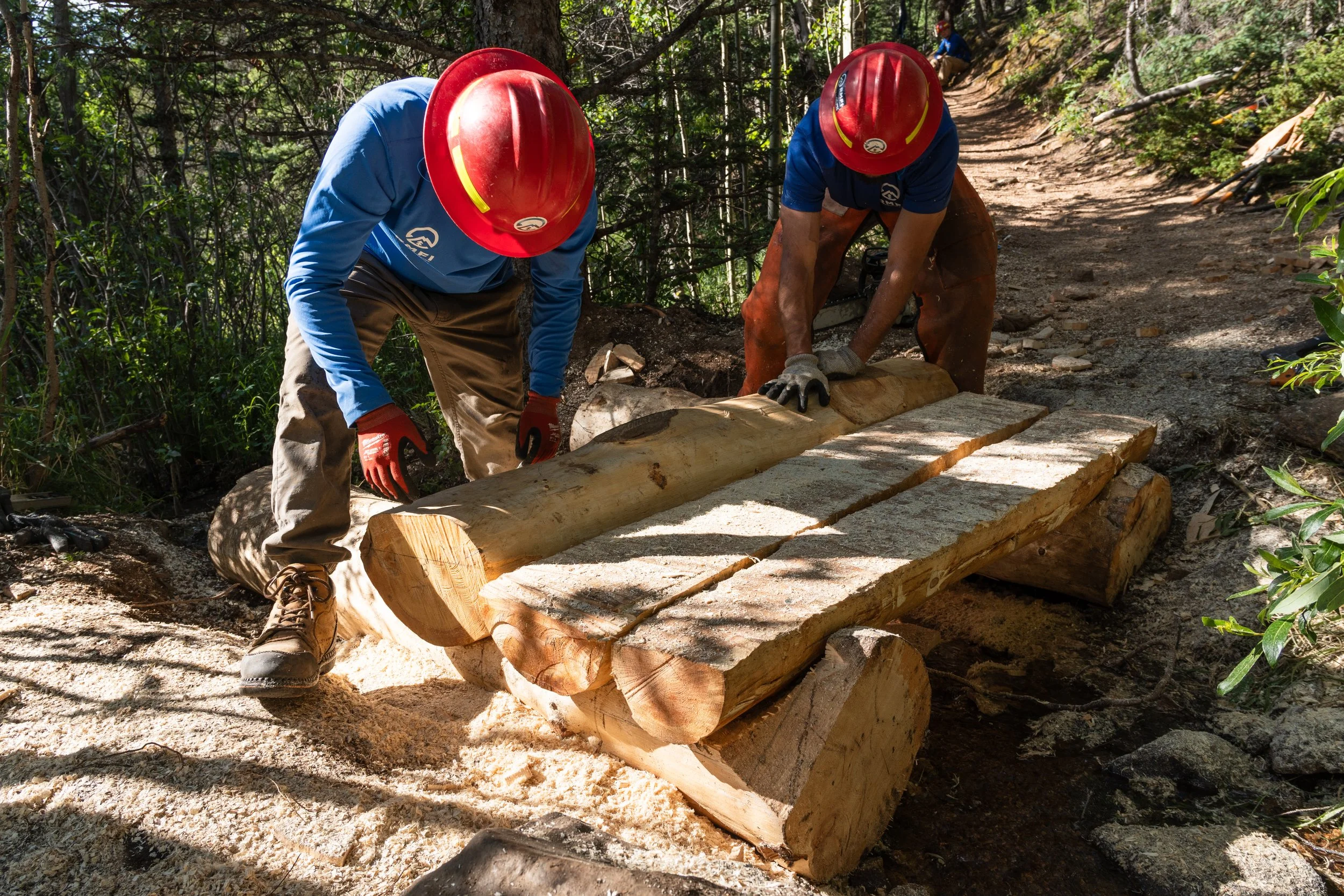
Bridge build on Barr Trail, Manitou Springs, CO, 2025. Photo by Michael Fitch.
JG: You hold a Bachelor of Fine Arts from Oklahoma Christian University. Has your academic training in art and design influenced the way you look at trails?
MF: I went to school for graphic design, and although I don’t work in the field, my time in school helped me grow as an artist and trail builder. One of the things I appreciate most is learning how to give and take critique. It’s the basis for developing your art skills and seeing things from a new perspective, and I think that applies to trails, too. Being totally inexperienced when I started in trail work forced me to jump in head first and try to learn many different skills at once. Anyone can learn the techniques you need to build good trails, though, and I think it sets you apart to be a good communicator. Everyone on a trail crew benefits from each other, and it’s so important to have quality feedback and ideas to share with your peers.
Also, my degree was focused on visual language as a whole, and that definitely applies to trails. Trail work is an artform in itself; the canvas is just a little different than what you’d typically expect.
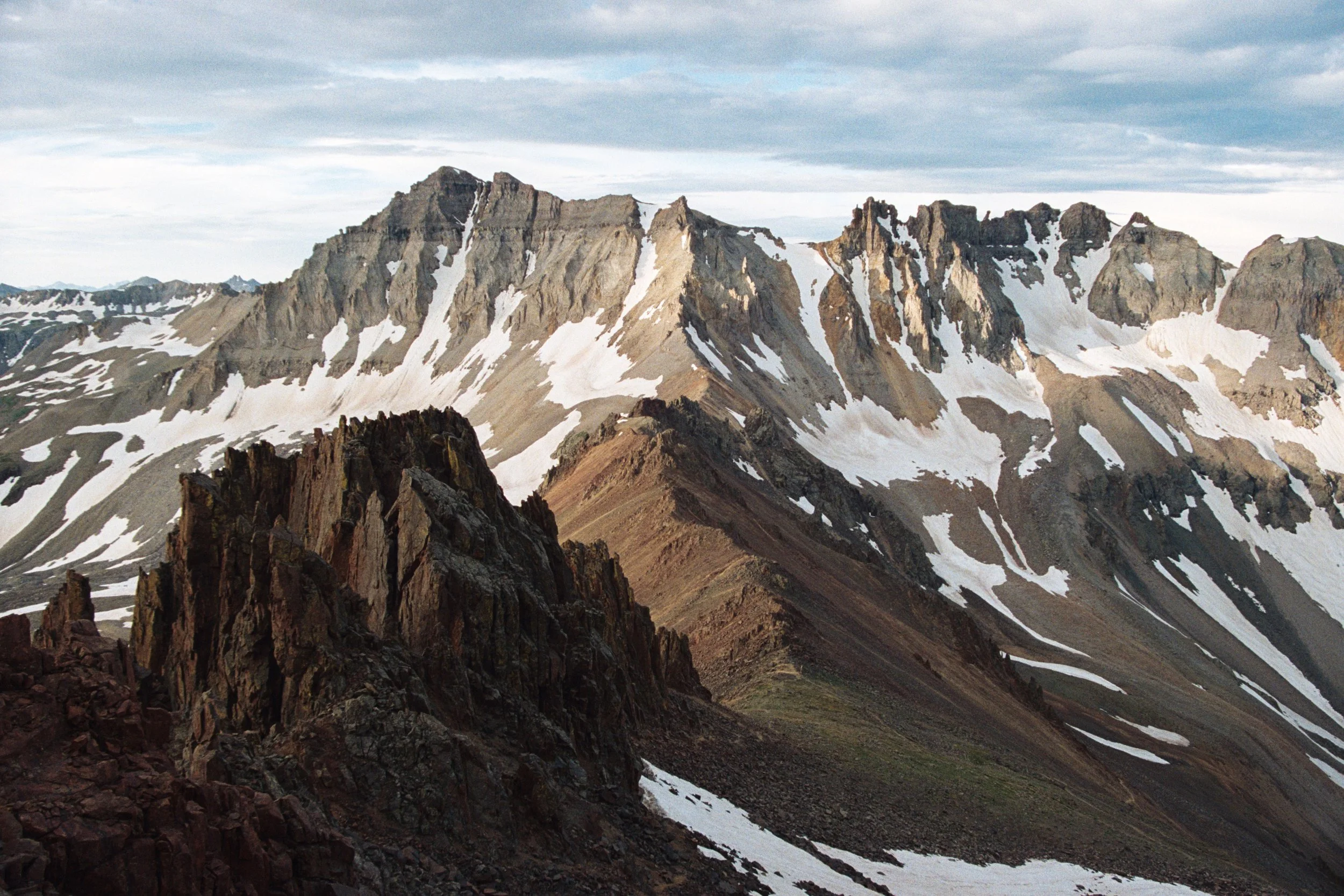
My first time visiting the San Juans. We started well before dawn to avoid the forecasted thunderstorms, and the soft glow of morning light was surreal. — Michael Fitch
JG: You prefer shooting analog. What is it about film that you prefer over digital?
MF: I just love everything about the process of film. Firing off the shutter, winding the film, or loading a new roll is just so satisfying. These older cameras have these bright, beautiful viewfinders that really immerse you with your subject. When I started shooting film, photography just clicked. It forces you to be intentional with how you shoot, depending on the results you want. Before trails, I worked at a camera shop, and that helped me fall in love with film. I had the chance to be in control of my process, from developing to scanning and printing. It’s an art that is often forgotten nowadays, and seeing a medium format slide on a light table is so surreal. In the end, though, the camera is just a tool, and every camera has its specialty. It feels good to create art when you’re using tools you love.
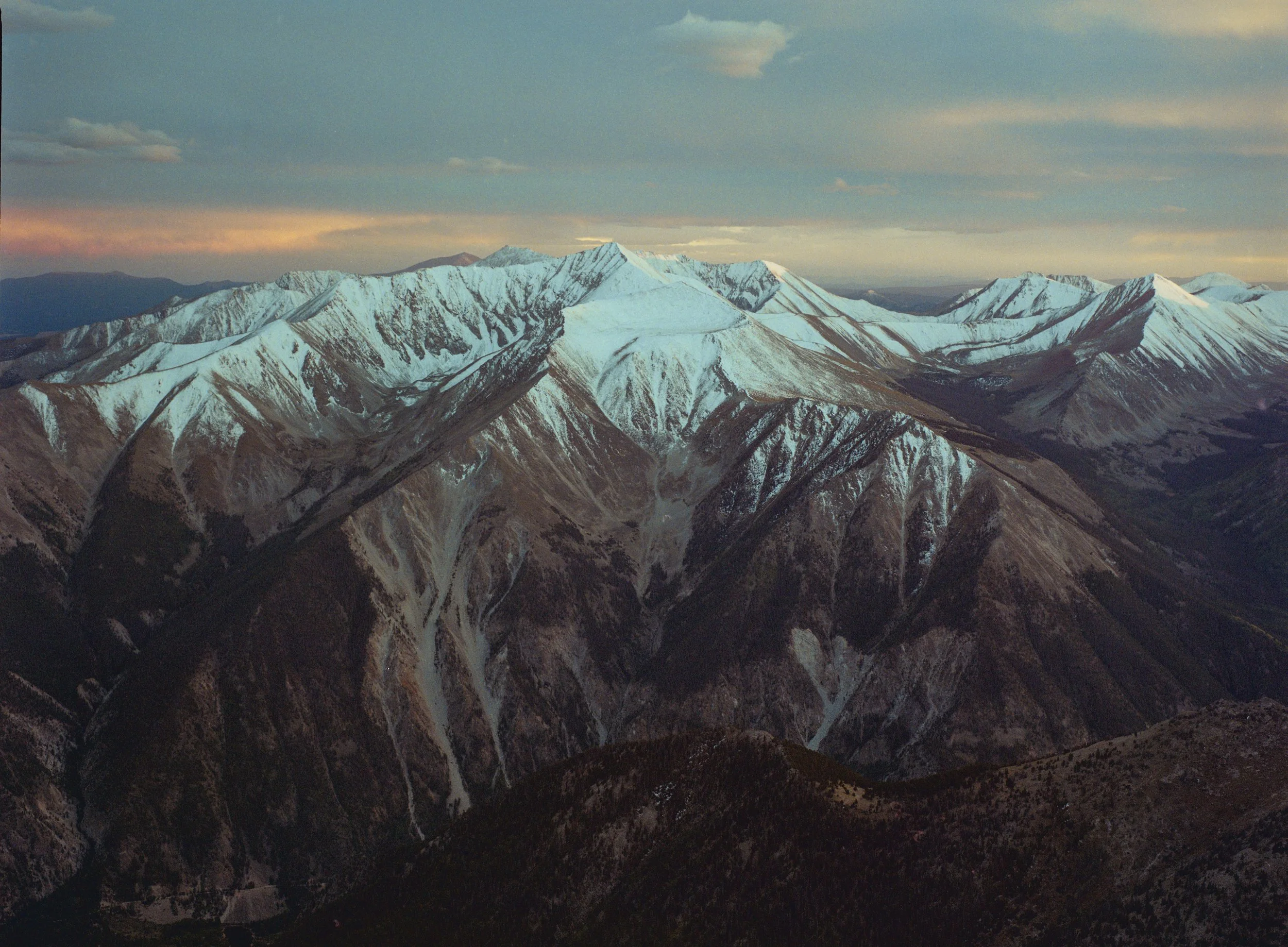
I hauled my Bronica medium format camera and a tripod up in freezing winds and total solitude, cursing as I was trying to get my equipment set up. I love firing off shots right after sunset. You get this incredible glow of leftover color with beautiful blue hues as the night sets in. — Michael Fitch
JG: Can you select one of your favorite photos and tell me about it?
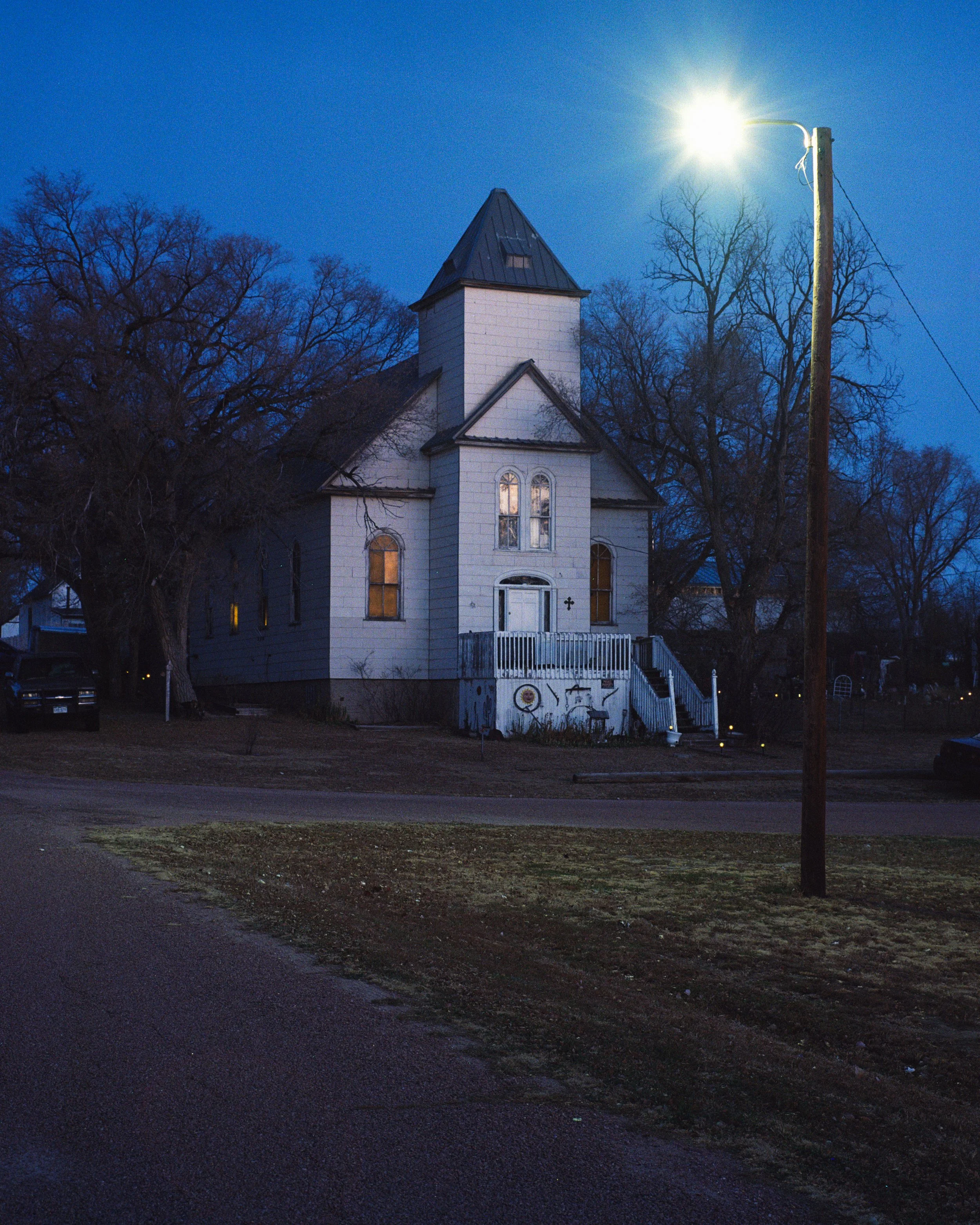
MF: This is one of my favorite photos I've ever taken. Some of my most meaningful work has come from photographing these beautiful yet decaying towns out on the eastern plains of Colorado. Blue hour provides this dream-like glow that romanticizes scenes like this. I grew up in an evangelical family, and it’s interesting to revisit this subject and imagery with a new perspective.
JG: Where can people see more of your work?
MF: I post regularly on instagram @fitchmichaelt and I have a full portfolio of design and photography work at michaelfitch.myportfolio.com.